
Call for Nature Based Solutions as Wildfire Risks Surge in Nepal
 Praveen Kumar Yadav
शुक्रवार, २०८२ चैत्र २० गते २२:०८ मा प्रकाशित
Praveen Kumar Yadav
शुक्रवार, २०८२ चैत्र २० गते २२:०८ मा प्रकाशित
KATHMANDU, As Nepal approaches the height of its wildfire season, government officials, researchers and community forest leaders are urging the need for locally led nature based solutions (NbS) to address escalating fire risks. The urgency was extensively discussed during the three provincial consultations held last week, where participants emphasized that traditional ecological practices—strengthened with modern technology—remain the most effective defense against increasingly destructive wildfires.
Nepal has seen a steep rise in forest fires over the past decade. In the first half of 2024 alone, more than 5,000 wildfire incidents were recorded across 74 districts, and officials say fires that were once seasonal are now more frequent, more intense and harder to contain.
Provincial secretaries from Lumbini, Karnali and Sudurpaschim—regions that together recorded more than 40,000 fire incidents between 2001 and 2023—reiterated the need to expand the use of NbS.
“Climate change has turned forest fires into catastrophic events, and the only sustainable way forward is to pair traditional practices with modern tools,” said Ajit Kumar Karn, Secretary of the Ministry of Industry, Tourism, Forest and Environment in Karnali Province. “Fire prevention becomes far more effective when communities can earn income from managing forest litter and restoring forests.”
In Lumbini Province, officials stressed that most fires continue to be human caused.
“Ninety nine percent of Nepal’s forest fires result from human activity,” said Pramod Bhattarai, Secretary of the Ministry of Forest and Environment. “Equipment and budgets matter, but we cannot control fires without conscious communities.”
Sudurpaschim officials warned that the scale of current fires demands disaster level coordination.
“Forest fires have become a serious threat that demands cooperation from government, security forces and local communities,” said Dirgha Narayan Koirala, Secretary of the Province Forest Ministry. “Protecting water sources and promoting the right tree species are essential to strengthening our landscapes.”
The consultations—organized by Lutheran World Relief (LWR) Nepal in Chandrauta, Birendranagar and Dhangadhi—brought together more than 150 representatives from Community Forest User Groups (CFUGs), Division Forest Offices, provincial ministries and local governments. Discussions centred on improving community preparedness, integrating NbS into forest and disaster risk management systems, and addressing persistent capacity gaps at the local level.
The consultations were conducted under the PunarUtthan Programme (2025–2029), a four year initiative led by LWR Nepal in partnership with Rupantaran, the Global Institute for Interdisciplinary Studies (GIIS), Nature Media Network (NMN) and the Kathmandu University School of Management (KUSOM). Funded through the Reversing Environmental Degradation in Africa and Asia (REDAA) initiative, the programme aims to strengthen wildfire and environmental resilience across Nepal’s interconnected farm–forest–water landscapes.
“Wildfires have effectively become a year round hazard in Nepal,” said Kiran Ojha, LWR Nepal’s Country Director. “The increasing loss of lives, homes, livestock and forests shows why preparedness must improve.”
The programme combines community knowledge with technologies such as GIS mapping, remote sensing, artificial intelligence and early warning systems. Planned activities include vulnerability assessments, soil and water conservation, agroforestry improvements, trials of fire resistant crops and tree species, groundwater recharge, and support for local enterprises linked to NbS.
“The progress we are seeing across all three provinces shows that wildfire resilience strengthens when science and community knowledge come together,” said Dr. Hira Dhar Chudali, Senior Programme Manager at LWR Nepal. “Our goal is to ensure that local institutions—not external actors—lead prevention and restoration efforts with confidence and evidence.”
A GIIS survey of 486 households identified 43 community led practices that reduce wildfire risk, including clearing leaf litter, protecting springs and ponds, removing invasive species, producing compost and maintaining fire lines. “These practices strengthen biodiversity, soil health and rural livelihoods,” said GIIS Director Dr. Uttam Babu Shrestha.
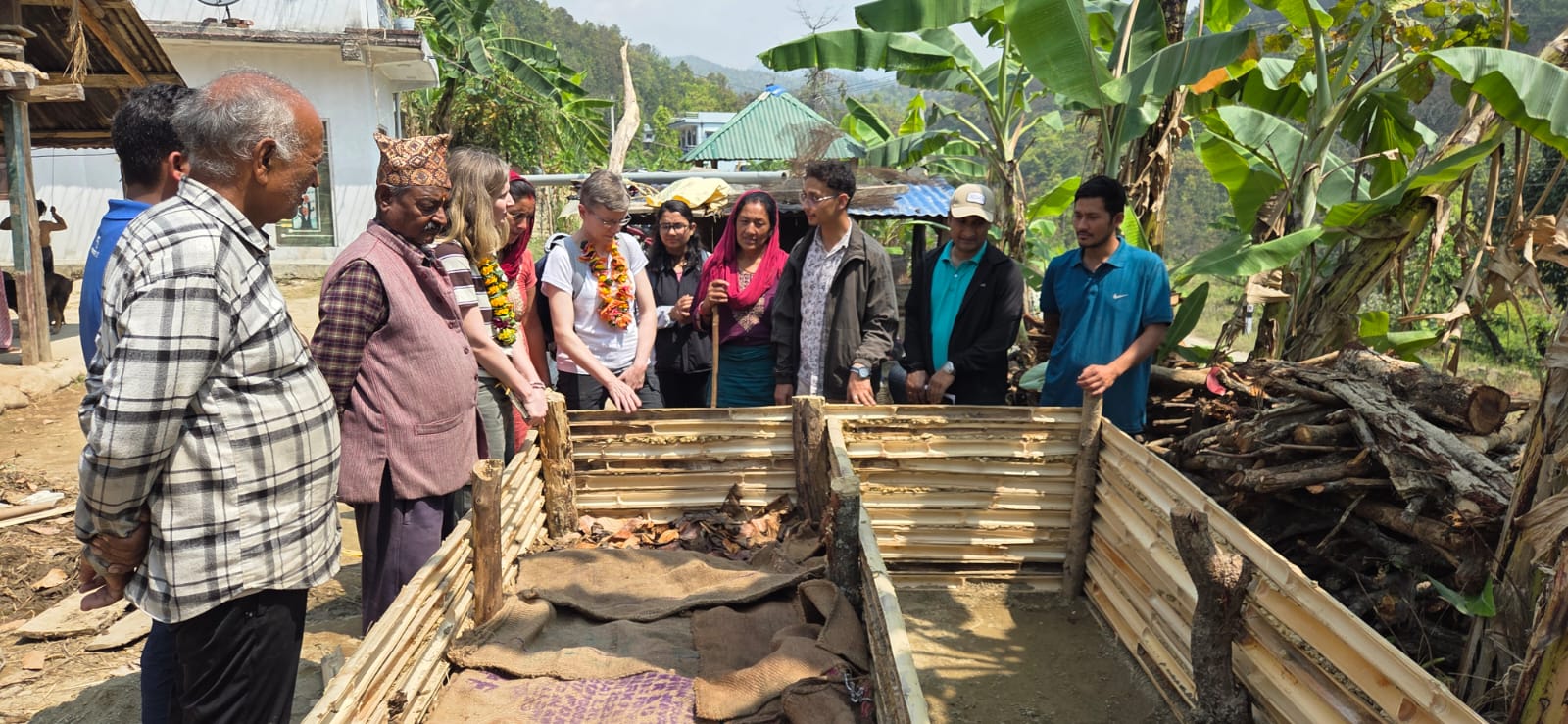
Meanwhile, REDAA representatives Francesca Booker and Benedicte Piton visited programme sites to observe interventions and interact with Community Forest User Groups applying NbS to reduce fire hazards and restore the farm–forest–water nexus.
Under PunarUtthan, LWR Nepal plans to train 20,000 people in wildfire management, improve livelihoods for 3,000 households, restore 40 hectares of degraded land and support 12 local governments in developing wildfire mitigation plans.
Experts warn that delaying the wider adoption of NbS could result in deeper ecological and economic losses. “The best option we have is to maximise the wisdom of nature—and of the communities who depend on it,” said Dr. Narayan Gyawali, Programme Director at LWR Nepal.
क्याटेगोरी : English, समाचार














तपाईको प्रतिक्रिया दिनुहोस