PunarUtthan Programme Review Highlights Locally-led Nature-Based Solutions to Wildfire Risks

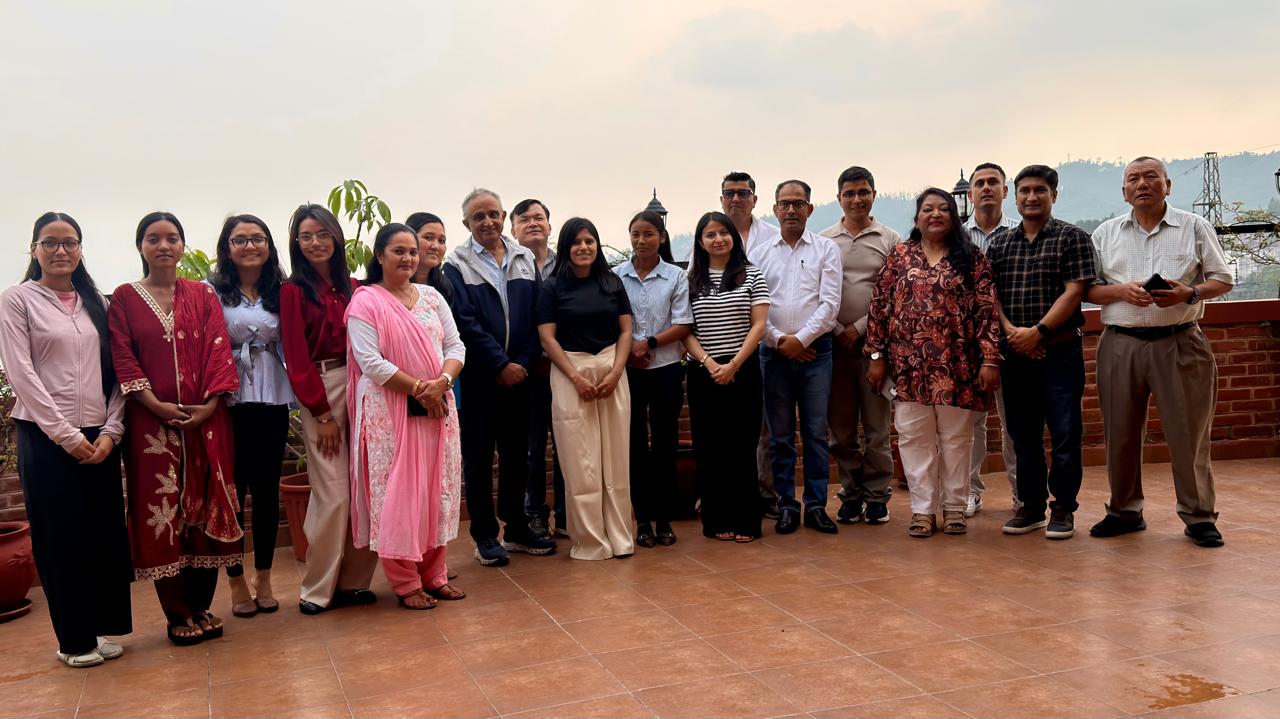
After one year of implementation, the team of PunarUtthan Programme gathered in Dhulikhel from May 14 to 17, 2026, to review progress and plan future actions aimed at reducing wildfire risks through nature-based solutions.
The annual review and planning meeting, held at the Himalayan Drishya Resort, brought together programme partners and consultants from Rupantaran, the Global Institute for Interdisciplinary Studies (GIIS), Nature Media Network (NMN), and Kathmandu University School of Management (KUSOM), along with technical experts and programme leaders.
Opening the session, Country Director Kiran Ojha described the initiative as an action-oriented programme that relies on learning from field-level practices. “This programme begins with action on the ground, and learning follows from those interventions,” he said, stressing the importance of collaboration among partners.
The programme is being implemented at a time when wildfire incidents are increasing across parts of Nepal, especially in provinces such as Lumbini, Karnali and Sudurpaschim, affecting agriculture, forests and local livelihoods.
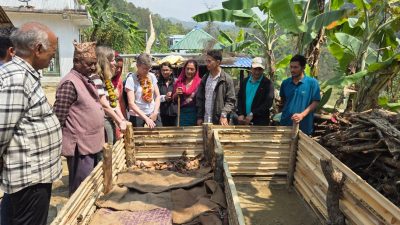
During the meeting, partners presented their progress over the past year. Shankar Poudel, Executive Director of Rupantaran, shared field experiences from districts including Surkhet, Kapilvastu, Kailali and Arghakhanchi. He explained how communities are testing practical solutions such as composting, irrigation ponds, agroforestry and green firebreaks.
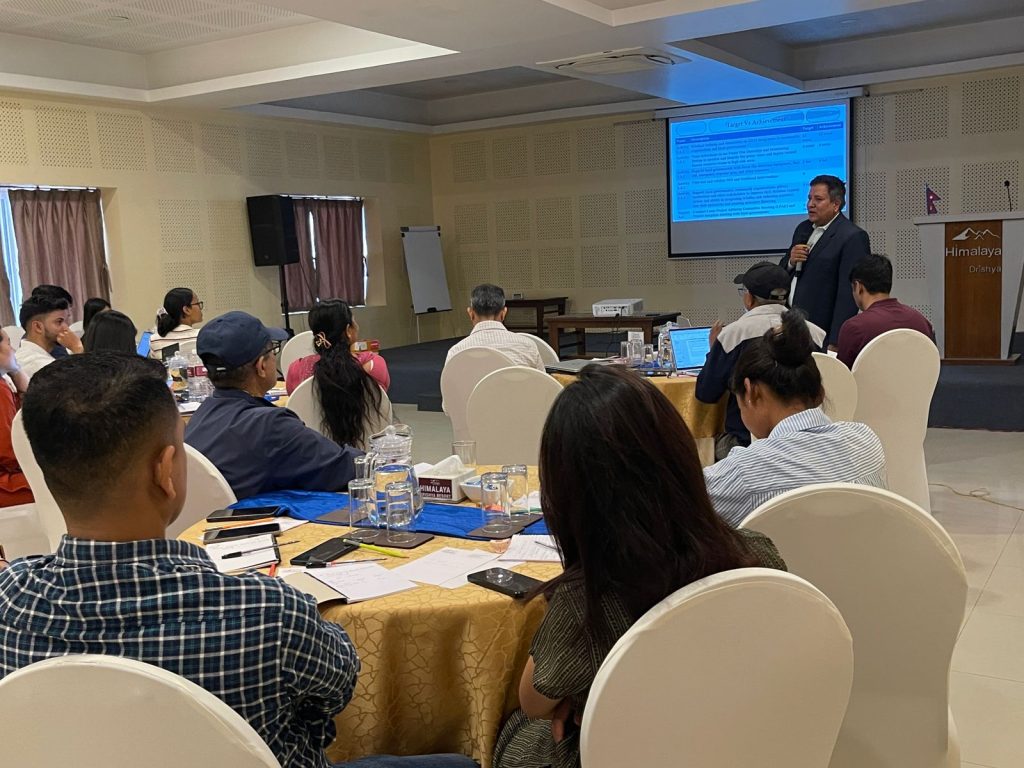
“These are solutions that communities can implement with available resources,” Poudel said. “They not only help manage land and water better, but also reduce the risk of wildfire spread.”
Programme lead Narayan Gyawali acknowledged the progress made within a short time but emphasised the need for clearer evidence and inclusion. “We need to document what changes have happened on the ground, especially after GEDSI interventions,” he said, adding that disability inclusion needs more attention.
A key focus of the discussion was the next phase of the programme, where partners plan to strengthen research and evidence generation. Currently, nature-based solutions are being tested across 26 community forests, and partners are now planning to systematically collect data and document outcomes. These findings are expected to be used for research purposes, including the development of research articles based on field-level interventions.
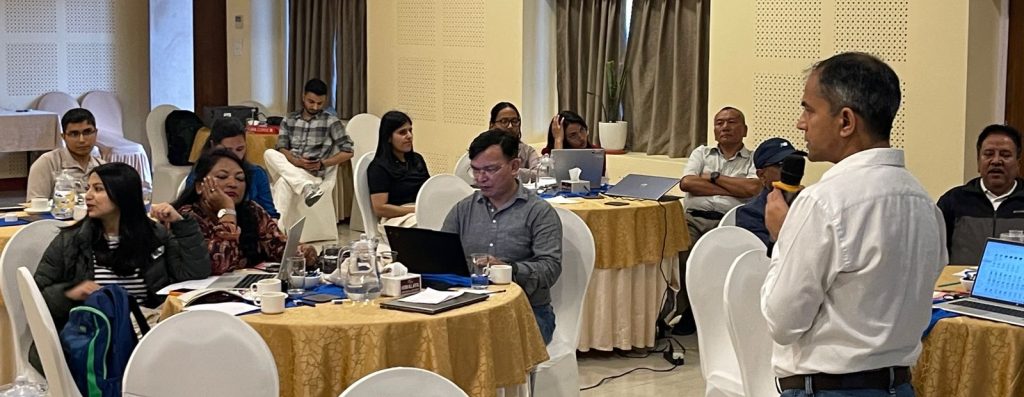
From a research perspective, Dr Uttam Babu Shrestha of GIIS pointed out the importance of timely and accurate data sharing. “Strong data from the field is essential if we want to generate evidence and influence policy through this programme,” he said.
Kathmandu University School of Management (KUSOM) also highlighted its role in supporting research and documentation. Dr LB Pun noted that academic engagement is key to turning field learning into practical knowledge. “We are working to ensure that lessons from the field are properly documented and translated into policy-relevant insights,” he said.
The meeting also included sessions on reviewing the programme’s workplan and budget, followed by group discussions to finalise activities for the coming year. Participants discussed research methods, monitoring tools and approaches to strengthen collaboration among partners.
The PunarUtthan Programme, implemented by Lutheran World Relief in partnership with Rupantaran, GIIS, NMN and Kathmandu University School of Management (KUSOM), is working in selected municipalities of Arghakhanchi, Kapilvastu, Surkhet and Kailali.
Supported through the REDAA programme and funded by the United Kingdom’s Foreign, Commonwealth and Development Office (FCDO), the initiative focuses on strengthening ecosystem resilience and supporting communities through locally led approaches.
Participants said the meeting helped bring partners together and align their work for the coming phase. “Collaboration is our strength,” Gyawali said. “If we continue working together, we can make a meaningful impact.”



तपाईको प्रतिक्रिया दिनुहोस