UNDP’s Secret Procurement of HIV Test Kits Bypassed Nepal’s Health System, Raising Questions Over Balen Government Oversight
 Arjun Adhikari
बुधवार, २०८२ चैत्र १८ गते २३:३९ मा प्रकाशित
Arjun Adhikari
बुधवार, २०८२ चैत्र १८ गते २३:३९ मा प्रकाशित
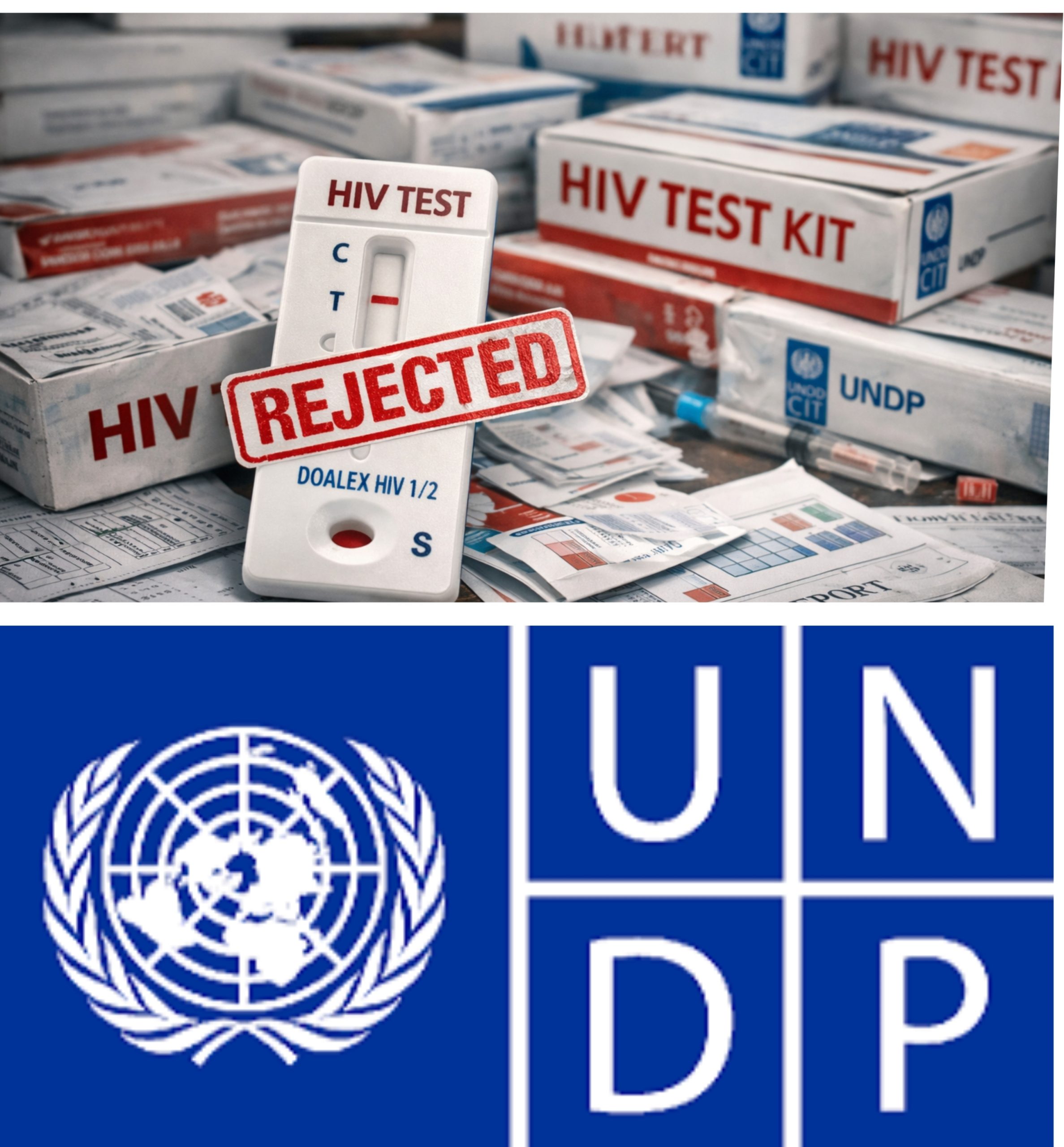
KATHMANDU — The United Nations Development Programme (UNDP) secretly purchased and attempted to deposit 900,000 dual HIV–syphilis test kits into Nepal’s government supply chain without informing senior officials — a move that officials say violated national protocols, exerted improper pressure on state agencies, and exposed persistent weaknesses in the oversight capacity of Prime Minister Balendra Shah’s administration.
According to officials familiar with the matter, UNDP transferred the kits — valued at NPR 1.2 billion — into the Department of Health Services’ central store in clear violation of established approval mechanisms. The test kits, never requested by the government, were imported under the stated aim of strengthening HIV detection during Nepal’s shift toward a governance agenda focused on transparency. Instead, they arrived unannounced and now sit in storage, many of them nearing expiration.
Procurement Executed Without Consultation
Internal documents and interviews indicate that the procurement was carried out by Gajanand Bhandari and Sujan Bantal, relatively new recruits to UNDP’s Global Fund TB, HIV and Malaria program. Both officials allegedly bypassed mandatory consultation with the National Centre for AIDS and STD Control (NCASC) and disregarded the guidelines governing HIV diagnostic supplies. Despite lacking authorization, they pushed state agencies to formally accept the shipment.
Officials say the pair moved ahead with the purchase despite Nepal’s clear testing standards, and then attempted to pressure government units to take responsibility for a consignment they had no role in approving.
Kits That Contradict National HIV Protocol
Nepal’s National HIV Testing and Treatment Guideline (2022) requires the country to follow an HIV only diagnostic sequence (A1, A2, A3). The dual HIV–syphilis kits bought by UNDP are not part of the national diagnostic architecture and are not approved for use in Nepal.
Despite this, UNDP imported SD Bioline HIV/Syphilis Duo test kits—devices that screen two diseases simultaneously—and attempted to push them into government stock, an action experts say undermines diagnostic integrity.
Health Authorities Were Kept in the Dark
Dr. Sarbesh Sharma, Director of the National Center for AIDS and STD Control (NCASC), said his office had no prior knowledge of the procurement — a violation he described as both procedural and practical.
He confirmed that Nepal requires only 250,000–300,000 HIV tests per year, making the decision to import 900,000 kits — most approaching expiration — indefensible.
“These kits were bought hastily and brought into the system without consultation,” Dr. Sharma said. “We cannot accept responsibility for items brought in violation of policy.”
Pressure From Senior Bureaucrats
Sources say the Health Secretary, Dr. Bikash Devkota, and the chief of the Health Coordination Division, Bhim Sapkota, applied significant pressure to force government storage units to accept the shipment, despite repeated objections from technical teams.
Technical officials refused, leading the government to instruct UNDP to take the kits back. The directive underscores the level of discomfort across multiple agencies faced with a consignment that violated national policy.
Pattern of Opacity Within UNDP’s Role
The episode comes as UNDP serves as the Principal Recipient of Nepal’s Global Fund grants — a position it has held since early 2025 — overseeing procurement, program management and disbursement for HIV, TB and malaria initiatives. Stakeholders say concerns about transparency and accountability have surfaced repeatedly in UNDP-managed health programs, with the latest incident reviving questions about procurement integrity.
It has also renewed scrutiny of Gajanand Bhandari, one of the officials involved, who faces allegations of holding fraudulent academic certificates — an issue that has troubled UNDP’s credibility among health-sector partners.
Questions Over the Scale of the Purchase
Government officials are now seeking answers about why such a large quantity was procured.
“Who benefits from bringing in 900,000 kits when the country needs only 200,000-300,000 a year?” one official asked. “Who approved this extraordinary decision in such a sensitive sector?”
With a firm expiration date of December 27, most of the kits could go unused, potentially costing the state millions of rupees in losses.
Anti Corruption Authorities Signals Concern
In the meantime, a senior official at the Commission for the Investigation of Abuse of Authority (CIAA) said that donor-funded shipments forced onto the state without prior notice meet the threshold for investigation. He added that spending foreign grants “recklessly and pressuring the government to accept them” lies squarely within the agency’s mandate.
A Test for Balen Administration
Prime Minister Balendra Shah and his government, which is committed to ending corruption, reforming governance, and strengthening oversight, now faces renewed scrutiny. Critics say UNDP’s ability to bypass national systems so easily reveals structural weaknesses within institutions the Balen-led government pledged to fortify.
The incident has exposed gaps not only in donor coordination but in the government’s own mechanisms for monitoring external procurement.
UNDP Yet to Explain
UNDP has yet to clarify why it procured 900,000 dual test kits; why it failed to coordinate with government agencies; and why it ignored Nepal’s approved diagnostic protocol.
Until answers emerge, the kits remain unaccepted in storage, nearing expiration — a symbol of what officials describe as a widening rift between Nepal’s national health systems and the international agency charged with overseeing a major share of the country’s Global Fund programs.
क्याटेगोरी : English, समाचारट्याग : ##CCM Nepal, ##Global Found NEPAL, ##MOHP, ##UNDP NEPAL









तपाईको प्रतिक्रिया दिनुहोस